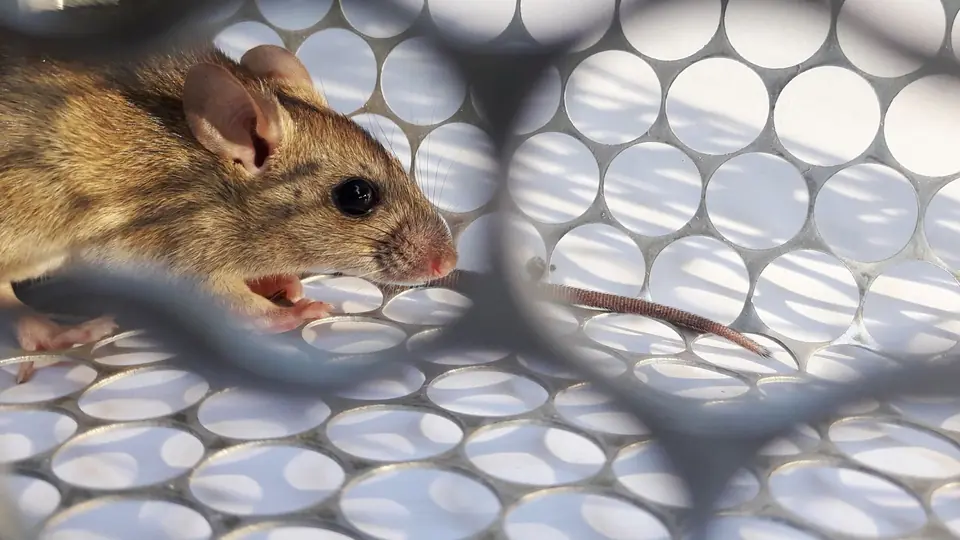
Why Do I Have Mice in My House in Winter?
If you are seeing mice in your house this winter, they are almost certainly coming in for warmth, shelter, and food. As nights get colder around Columbia and the rest of Howard County, mice look for a dry, heated place to nest. A house mouse can squeeze through an opening about the size of a dime, so a small gap around a pipe, a worn garage-door seal, or a crack in the siding is often enough. Traps can catch the mice already inside, but they will not stop the next ones unless those entry points are sealed.
Home Advantage Pest Services can inspect the home, remove the mice, and seal those gaps. Same-day service is available in every city we serve.
Why do mice come inside when it gets cold?
Mice spend much of the year outdoors or in sheds, woodpiles, and other sheltered spots. When temperatures drop, a heated house becomes a better option. Inside, they find steady warmth, leftover food or pet food, and quiet places to nest, such as the attic, garage, basement, or the space behind kitchen cabinets.
This is a common winter problem in our area because mice follow warmth and food, not because they suddenly appear out of nowhere. If a mouse got in last winter and the opening was never sealed, another one can use that same gap this year. A couple of mice can turn into a real problem in a matter of weeks, so it is worth acting when you first notice signs.
How do mice get into homes in Columbia and Howard County?
A house mouse does not need a large hole. If you can fit a dime in the gap, a mouse can usually get through it. Around local homes, the openings we see most often include:
- Gaps where pipes, wires, or air-conditioning lines enter the house
- Worn garage-door seals, especially where you can see daylight underneath
- Openings at soffits, roof returns, and the roofline
- Crawl-space and foundation vents
- Gaps around dryer vents, exhaust fans, and siding corners
Many Columbia, Ellicott City, and Clarksville homes sit near woods, mulch beds, or storage sheds, which gives mice cover as they approach the foundation. Once they find a gap, they can travel along walls into kitchens, pantries, and attics. Finding those openings, and sealing them with materials mice cannot chew through, is the part most do-it-yourself trapping leaves out. That work is included with our rodent control service on the first visit. You can also read more about rodent exclusion and seal-up.
How can I tell if I have mice this winter?
You may see a mouse, but many people notice other signs first, especially at night when the house is quiet and mice are most active:
- Small, dark droppings, about the size of a grain of rice, in cabinets, drawers, the garage, or along walls
- Scratching or scurrying in the walls, ceiling, or attic
- Chewed food packaging, insulation, or wires
- Greasy rub marks along baseboards, or a musty smell in the attic, basement, or crawl space
- A dog or cat suddenly staring at, sniffing, or pawing one spot
Fresh droppings mean mice are active right now. If you are only hearing movement at night, it is still worth having the house checked. Mice often travel inside wall voids and attics before they spend much time in the kitchen.
Why don’t store-bought traps fix a winter mouse problem?
A trap can catch the mouse you saw, and we use trapping too. The problem is what happens next. If the gap that let that mouse in is still open, another mouse can follow the same path, especially in winter, when more mice are looking for a warm place. Store-bought traps also get placed in the wrong spots a lot of the time. Mice prefer to run along walls and behind objects, not across the middle of a room. If traps sit in the open, or if food is still easy to reach, mice may ignore the trap altogether.
A lasting fix has two parts: remove the mice already inside, and seal the exterior entry points so the next ones cannot get in. Sealing without trapping leaves mice inside. Trapping without sealing just starts the problem over.
What can I do right now?
These steps will not replace professional rodent control, but they can make your home less inviting while you wait for a visit:
- Store food, birdseed, and pet food in hard, sealed containers, and do not leave pet food out overnight
- Take trash out regularly and keep lids tight
- Keep garage doors closed, and look for gaps in the bottom seal
- Move firewood, wood piles, and clutter away from the foundation
- Note where you are seeing droppings, hearing sounds, or finding chewed items, so your technician can start in the right places
Avoid scattering loose poison baits around the house, especially if you have children or pets. Placement matters, and a technician can put bait and traps in protected spots along the paths mice actually use.
How does Home Advantage Pest Services handle mice?
Our rodent control service is built around removal and exclusion, not traps alone. On the first visit we inspect the inside and outside of the home, bait and trap along travel paths in spots kept away from kids and pets, and seal the exterior entry points so the problem does not start over. Sealing is included, with no separate charge. About 14 days later we come back to check for any gaps we missed, replace traps, refill bait stations, and reassess the problem if needed.
Dionte Jackson, the owner of Home Advantage Pest Services, is MDA-certified in categories 7A (General Structural) and 7D (Rodent Control).
You can book rodent control as a one-time service or as part of a plan. One-time services start at $245, the price varies, and every one-time service includes two treatments for the price of one, 14 days apart. The 14-day follow-up is that second treatment. Rodent control is also included in our Premium plan, which is $49.99 a month plus an initial service fee that varies. Plan memberships have a one-year agreement.
Frequently asked questions
Can a mouse really fit through a hole that small? Yes. A house mouse can squeeze through an opening about the size of a dime. That is why careful sealing around pipes, vents, garage doors, and siding matters so much.
Is it normal to see mice only at night? Yes. Mice are most active at night, when the house is quiet. Scratching in the walls or ceiling after dark is one of the most common first signs.
Do you only set traps, or do you seal the house too? Both. We bait and trap the mice already inside and seal the exterior entry points on the first visit. Sealing is included, with no separate charge. About 14 days later we come back to check for missed gaps, replace traps, and refill bait stations.
How much does one-time rodent service cost? One-time services start at $245, and the price varies based on the home and the job. Every one-time service includes two treatments for the price of one, 14 days apart. We can give you an exact figure with a free estimate.
Is rodent control included in a maintenance plan? Yes, on our Premium plan ($49.99 a month plus an initial service fee that varies) and on FortKnox ($125 a month plus an initial service fee that varies). The Standard plan is $42.99 a month plus an initial service fee that varies and covers everyday household insects, but not rodents.
Ready for help with mice this winter?
If you have seen a mouse, found fresh droppings, keep hearing scratching in the walls, or already trapped a mouse and the signs came back, it is time to call. Home Advantage Pest Services offers free estimates and same-day service in every city we serve: Columbia, Ellicott City, Elkridge, Clarksville, North Laurel, Scaggsville, Fulton, and Rockville, including Potomac and Derwood.
Request a free estimate or call (301) 665-0354, Monday through Saturday, 8am to 6pm. Learn more about our rodent control service.

Written by Dionte Jackson, Owner and Maryland Certified Pest Control Applicator (#32375-81326), Home Advantage Pest Services. Dionte Jackson founded Home Advantage Pest Services in 2018 and personally oversees every job. Dionte is a Maryland Certified Pest Control Applicator (#32375-81326), licensed in general structural pest control and rodent control, and serves homeowners across Howard County and the Rockville area.We are a family-owned pest control company serving Columbia, MD and nearby Howard County communities with residential and commercial pest control.
Need help with mice & rats?
Same-day & same-week service, Mon–Sat 8am–6pm. Free estimates.