🐝 Why Wasps & Carpenter Bees Love Shrubs and Bushes (And What It Means for Your Home) 6 If you’re noticing wasps flying low around your bushes or large bees hovering near shrubs, you’re not alone!
Why Wasp and Carpenter Bees tender to hover your shrubs, trees, and bushes
🐝 Why Wasps & Carpenter Bees Love Shrubs and Bushes (And What It Means for Your Home)
If you’re noticing wasps flying low around your bushes or large bees hovering near shrubs, you’re not alone—especially here in Columbia, Ellicott City, and surrounding Maryland areas.
Shrubs and bushes are one of the top hotspots for stinging insect activity, and there’s a reason why.
Let’s break it down 👇
🌿 1. Shrubs Provide the Perfect Shelter
Shrubs and dense bushes create:
- Shade from direct sunlight
- Protection from wind and rain
- Hidden areas safe from predators
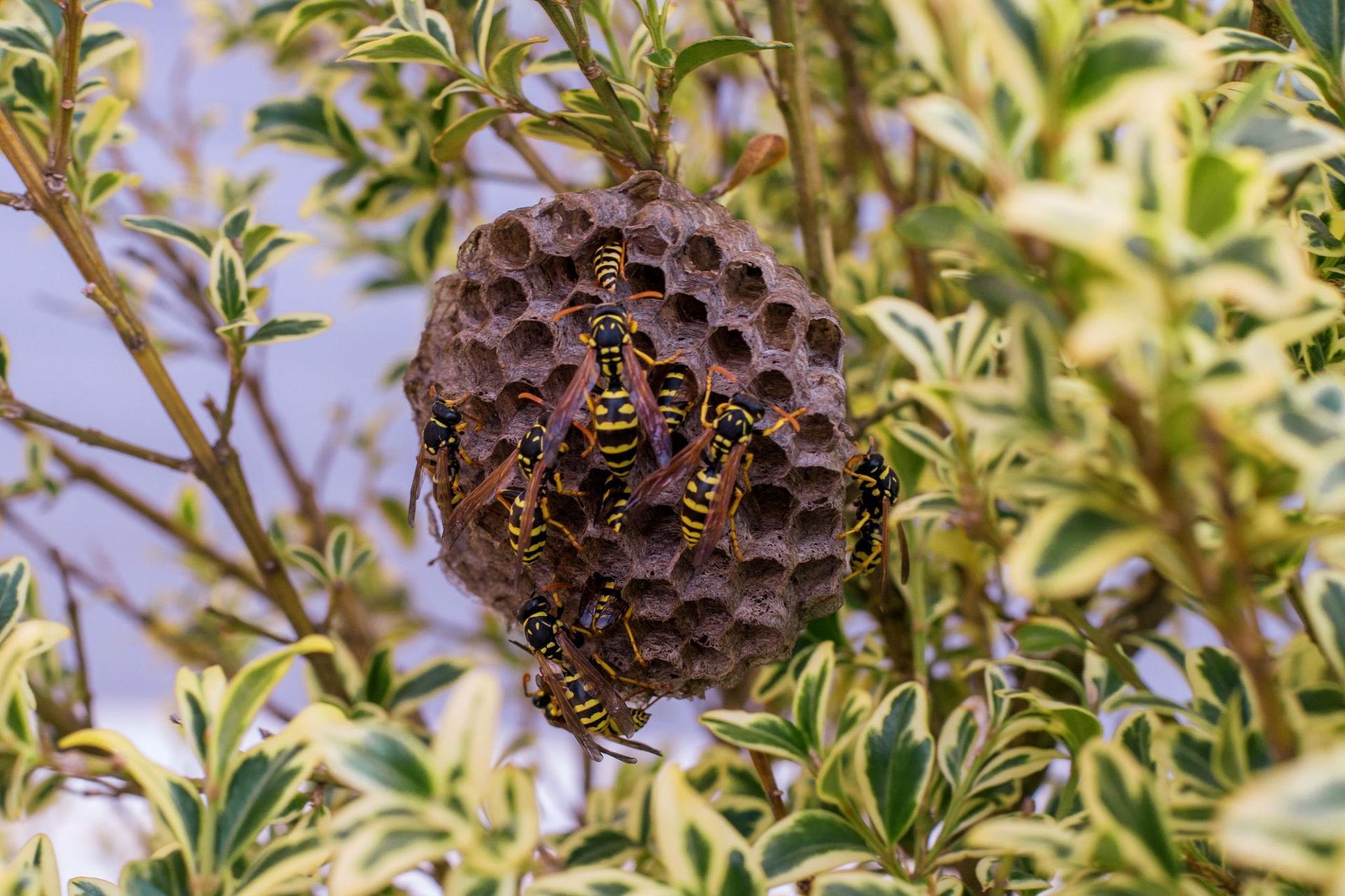
👉 This makes them ideal for yellow jacket nests and even some paper wasps that build within branches.
For homeowners, this means:
- Nests often go unnoticed until activity spikes
- You might not see the nest—just the traffic
🐝 2. Carpenter Bees Target Nearby Wood Structures
While carpenter bee don’t live inside shrubs, they are heavily attracted to areas around them.
Why?
- Shrubs are often planted near:
- Decks
- Fences
- Trim boards
- Sheds
👉 These are prime drilling zones for carpenter bees.
You’ll often see them:
- Hovering aggressively (especially males)
- Flying in circles near bushes
- Returning to the same wood surface repeatedly
3. Bushes Hide Ground Nests (Big Problem)
This is where things get dangerous.
Many **ground nesting wasp species build nests:
- In mulch beds
- Under root systems
- Beneath dense shrub coverage
🚨 The issue:
- You won’t see the nest
- You’ll only notice once they get disturbed
This is when stings happen—especially during:
- Landscaping
- Mulching
- Kids or pets playing nearby
🌸 4. Shrubs Attract Food Sources
Shrubs often produce:
- Nectar
- Pollen
- Small insects (prey for wasps)
This creates a feeding zone, drawing in:
- Wasps hunting protein
- Bees collecting pollen
👉 More food = more activity = higher chance of nesting nearby
⚠️ Why This Matters for Your Property
If left untreated, shrub areas can become:
- Stinging insect hubs
- Recurring nesting zones year after year
- High-risk areas for family and customers (especially for your clients)
🛠️ Pro-Level Prevention (What Actually Works)
Here’s what we recommend at Home Advantage Pest Services:
✔️ Shrub & Mulch Bed Treatments
- Non-repellent treatments to eliminate hidden nests
- Targeted applications where activity is highest
✔️ Entry Point Treatment (For Carpenter Bees)
- Dust + liquid combo inside active holes
- Follow-up sealing to prevent reinfestation
✔️ Routine Exterior Maintenance
- Keeping shrubs trimmed
- Reducing moisture buildup
- Breaking up nesting conditions early
📍 Local Insight (Maryland Specific)
In areas like:
- Columbia
- Ellicott City
- Laurel
- Fulton
We see peak activity:
- Late spring → early fall
And shrub-heavy landscapes = higher-than-average wasp pressure
💬 Final Thought
If you’re seeing:
- Wasps flying in and out of bushes
- Bees hovering near your deck or fence
- Increased activity in mulch beds
👉 There’s a strong chance something is already nesting.
🚨 Need Help?
At Home Advantage Pest Services, we specialize in:
- Wasp nest removal (including hidden ground nests)
- Carpenter bee treatments & prevention
- Full exterior protection plans
📞 Don’t wait until someone gets stung—get ahead of it.
Written by Diont'e Jackson, Owner & Pest Control Specialist at Home Advantage Pest Services. Serving Columbia, MD and surrounding communities with over a decade of experience in residential and commercial pest management.